
Chief Justice of India B R Gavai affirmed his respect for all religions after facing online criticism regarding comments made during a case about the reconstruction of a Lord Vishnu idol.
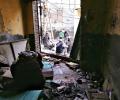
Delhi Police strongly opposes bail pleas of activists Umar Khalid, Sharjeel Imam, and others in the February 2020 riots case, claiming it was a pre-planned attack on the nation's sovereignty and an attempt to divide society on communal lines.
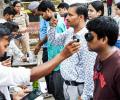
The Supreme Court has directed the Union Public Service Commission (UPSC) to incorporate provisions for scribe changes and implement screen-reader software for visually-impaired candidates in its examinations. The court emphasized the constitutional rights of differently-abled people and the need for inclusive governance.

The Supreme Court of India has questioned the legal status of Rohingya refugees living in the country, raising concerns about providing resources to illegal entrants while Indian citizens face poverty.

Justice Ujjal Bhuyan, who is sharing the bench, differed with the course of action adopted against the errant lawyer, and said, "I have my own views on this, he is the CJI, it is not a matter of joke!"
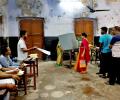
The Supreme Court has directed the Maharashtra government and its state election commission to conduct local body elections, clarifying that the results will be subject to the court's final verdict, especially concerning the 50% quota limit. The court will hear pleas regarding OBC reservation in local bodies in January 2026.

Film folk have been looking very glamorous in the last two days, thanks to the Bollywood Hungama OTT India Fest.

It is shameful that Kashmir Times has been attacked in the way it has and that Anuradha Bhasin has not found more voices to speak in support of her and her paper, points out Aakar Patel.
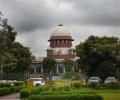
The Supreme Court has restrained lower courts from releasing the accused in a digital arrest fraud case where a 72-year-old lawyer was duped of Rs 3.29 crore. The court expressed concern over the growing cybercrime and the targeting of elderly citizens.

The Supreme Court is examining the extent to which courts can intervene when governors delay or refuse to act on bills passed by state assemblies. The court questioned the Centre on whether judicial review is barred in cases of gubernatorial inaction, sparking debate on the balance of power between states and the central government.

The ED has accused Congress leaders Sonia Gandhi and Rahul Gandhi, as well as late party leaders Motilal Vora and Oscar Fernandes, along with Suman Dubey, Sam Pitroda, and a private company, Young Indian, of conspiracy and money laundering.

The Supreme Court has directed the CBI to conduct a pan-India investigation into digital arrest scams and questioned the RBI about its lack of AI usage in detecting and freezing accounts used by cybercriminals.

The Supreme Court questioned petitioners who challenged the accuracy of India's COVID-19 vaccine adverse effect data, suggesting they unduly trusted UK figures. The court heard arguments about alleged deaths due to the Covishield vaccine and reserved its order.

The Supreme Court of India has affirmed the country's right to bring back offenders who are evading the law, dismissing a plea seeking withdrawal of an extradition request.
The Supreme Court has questioned the central government about the possibility of constructing a border wall to prevent illegal immigration, drawing parallels with the US border policy. The court also addressed concerns about the detention and deportation of Bengali-speaking migrant workers.
The Supreme Court has expressed serious concern over the rising cases of digital arrest cybercrime in India, where fraudsters extort money from victims by posing as law enforcement officials. The court has vowed to deal with such cases with an iron hand and has sought reports from the Ministry of Home Affairs and the CBI.

The Supreme Court is considering relaxing the ban on firecrackers in Delhi-NCR ahead of Diwali, citing practical concerns and the need to balance environmental and livelihood interests.
The Centre told the Supreme Court that governors are not indefinitely sitting on bills passed by state legislatures, and that barring a few exceptions, most have acted in a way which the apex court would have perhaps desired. Solicitor General Tushar Mehta argued that a Governor is "not a rubber stamp" and has a duty to preserve, protect, and defend the Constitution.

A lawyer allegedly attempted to throw a shoe at Chief Justice of India BR Gavai during court proceedings. Security intervened, and the lawyer was removed from the premises. The CJI remained composed and continued with the proceedings.
The Supreme Court of India denied bail to a man accused of being associated with ISIS, citing concerns about a potential 'ring of terror' plot. The decision came after the accused challenged a lower court's denial of bail in a case involving charges under UAPA and IPC.

The Supreme Court of India has refused to entertain a plea seeking a ban on Salman Rushdie's controversial novel 'The Satanic Verses'. The court noted that the plea effectively challenged a previous Delhi High Court judgement.
Calling itself the "custodian of the Constitution", the Supreme Court on Thursday asked if it could "sit idle" if a constitutional functionary like governor failed to discharge duties, as it reserved its verdict on the presidential reference on grant of assent to bills.
The Supreme Court has sought responses from the Centre and others on a plea challenging the validity of a provision of the Income Tax Act that allows political parties to receive "anonymous" cash donations below Rs 2,000.
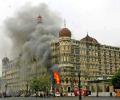
The trial of Abu Jundal, accused in the 26/11 Mumbai terror attacks, is set to resume after the Bombay High Court overturned a lower court order requiring authorities to hand over confidential documents to the accused.

The Supreme Court has sought responses from the Centre and Union Territory of Ladakh regarding the detention of climate activist Sonam Wangchuk under the National Security Act. Wangchuk's wife filed a plea seeking his release. The court has scheduled the next hearing for October 14.
The Supreme Court has directed all states and Union Territories to report on the implementation of guidelines for addressing mental health issues and suicide among students in educational institutions. The Centre has also been asked to file a compliance affidavit.
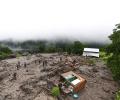
A bench of Chief Justice B R Gavai and Justice K Vinod Chandran also issued notices to the Union Ministry of Environment, Forest and Climate Change, the National Highway Authorities of India (NHAI) as well as the governments of Himachal Pradesh, Uttarakhand, Jammu and Kashmir and Punjab.
The Supreme Court has said that selling land or property is not a service under the Finance Act, 1994, so such sales cannot be charged with service tax.

The Centre has argued before the Supreme Court that state governments cannot use writ jurisdiction to challenge the actions of the President and Governor regarding bills passed by state assemblies, particularly concerning fundamental rights violations. The President seeks the Supreme Court's opinion on whether states can file writ petitions under Article 32 and the scope of Article 361.

The Supreme Court has directed the removal of all cattle and other stray animals from highways and expressways, citing safety concerns and frequent accidents.

The Supreme Court has permitted the sale and bursting of green crackers in Delhi-NCR for Diwali, relaxing the ban on green firecrackers as a temporary measure from October 18 to 21. The court has asked pollution control boards to monitor pollution levels and file reports. The order also includes measures to prevent the sale of non-compliant crackers.

The Supreme Court has questioned the NHAI regarding toll collection on a highway stretch in Kerala where commuters face extreme delays. The court is reviewing a High Court order suspending toll collection due to poor road conditions and severe traffic congestion.

The Supreme Court has ordered authorities not to take coercive action against owners of diesel vehicles over 10 years old and petrol vehicles older than 15 years in Delhi-NCR.

The Supreme Court has directed authorities to relocate stray dogs from institutional areas like schools and hospitals to designated shelters due to a rise in dog bite cases. The court also addressed the issue of stray animals on highways.
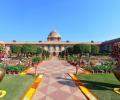
The Supreme Court has ruled that a Governor cannot send bills to the President for consideration if the state assembly has already cleared them for a second time. The court was questioning the Centre over the powers of the Governor when it comes to granting assent to bills.
The Supreme Court of India, led by Chief Justice B R Gavai, addressed concerns about being influenced by narratives against the Enforcement Directorate (ED). The court emphasized its independence from news and social media, while also acknowledging instances of overstepping by the ED.

The Supreme Court on Monday deferred to October 13 the hearing on a plea of telecom major Vodafone Idea Ltd seeking quashing of the additional adjusted gross revenue (AGR) demands for the period until 2016-17.
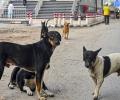
The Supreme Court will hear a suo motu case regarding the relocation of stray dogs in Delhi-NCR following widespread protests against an earlier order. A new three-judge bench will review the matter, focusing on the implementation of animal birth control rules and the creation of adequate shelters.

The Supreme Court has ordered the removal of all stray dogs from Delhi-NCR streets following concerns about rabies and dog bite incidents, particularly those involving children. The court criticized animal lovers and activists, questioning their ability to compensate for the loss of life due to rabies.

'He's been doing something we don't talk about much, working with acid attack survivors.' 'He supports them not just emotionally, but also financially.' 'His Mir Foundation helps them with the surgeries they have to go through to step out again and get back their lives.' 'He doesn't talk about it and I only learnt about this when we were in Kolkata once and some of the girls had come to meet him at the hotel.'
 © 2026 Rediff.com - Advertise with us - Disclaimer - Privacy Policy - Sitemap - Feedback - About us - Terms of use - Grievances